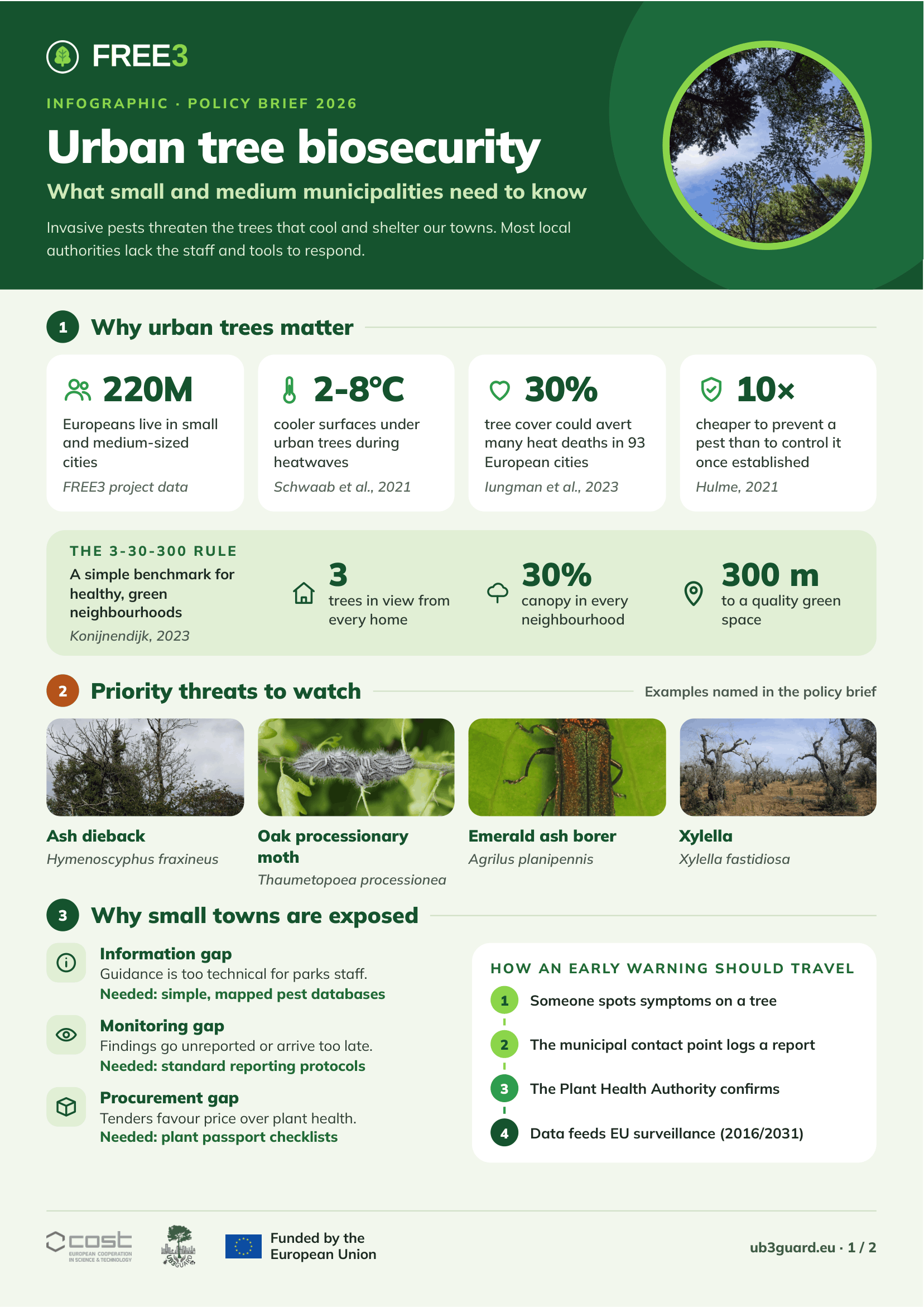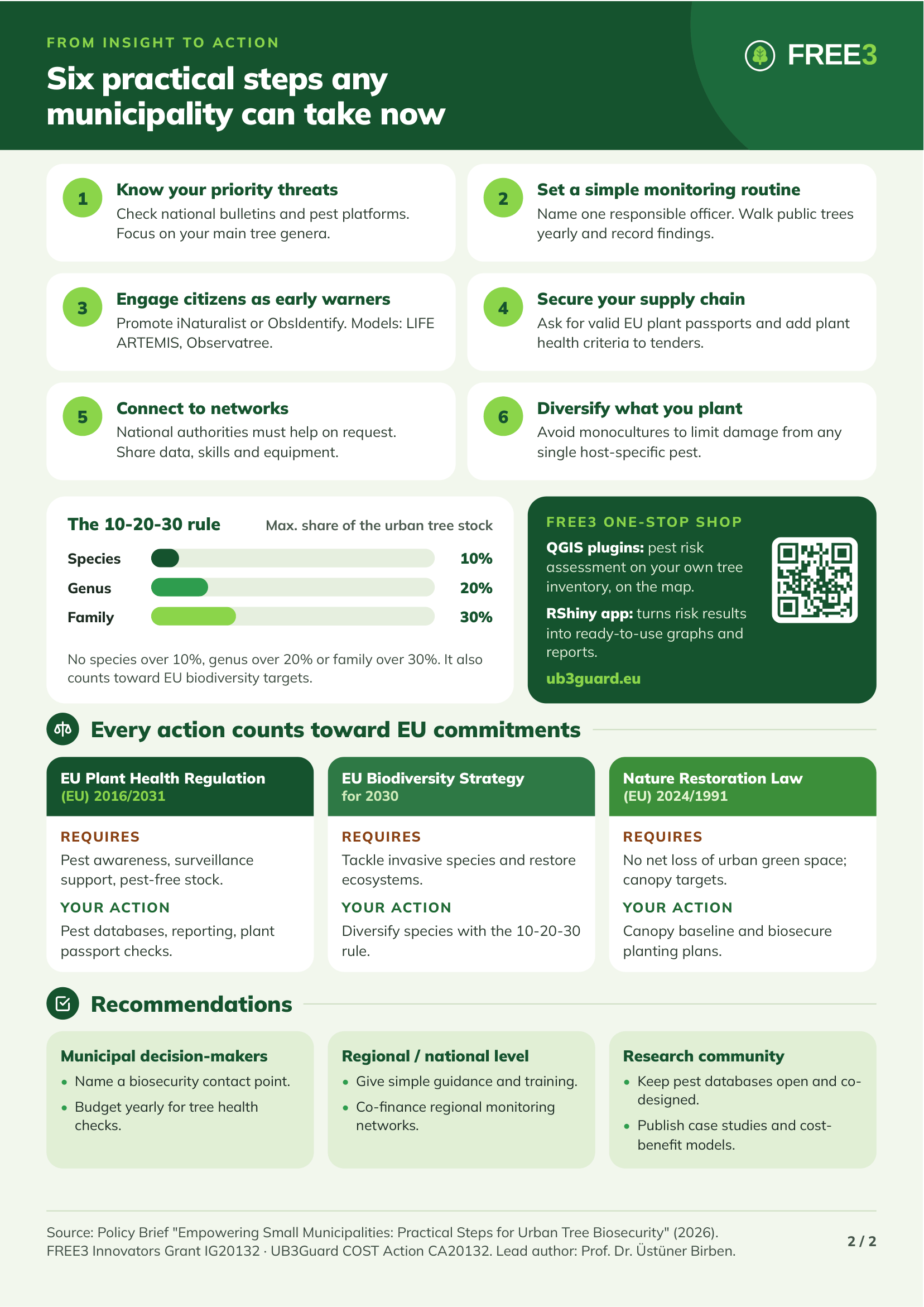
Small and medium-sized towns face mounting threats from invasive pests and climate stressors, yet many local authorities lack the dedicated staff and specialised tools required to respond effectively. To address this challenge, our FREE3 project has published a new infographic policy brief titled “Empowering Small Municipalities: Practical Steps for Urban Tree Biosecurity” (lead author: Prof. Dr. Üstüner Birben).
Key Highlights:
-
The Urgency of Urban Forests: Urban trees provide vital climate cooling, reducing surface temperatures by up to 8.2 °C during heatwaves, while benchmarks like the 3-30-300 rule help guide healthy, resilient neighbourhoods.
-
Priority Threats to Watch: Local authorities are urged to monitor major high-risk pathogens and pests, including Hymenoscyphus fraxineus (ash dieback), Thaumetopoea processionea (oak processionary moth), Agrilus planipennis (emerald ash borer), and Xylella fastidiosa.
-
Six Practical Steps for Municipalities: From establishing simple yearly monitoring routines and securing supply chains with EU plant passports to diversifying tree stock using the 10-20-30 rule (max 10% per species, 20% per genus, 30% per family), towns can take concrete actions today.
-
The FREE3 One-Stop Shop: Municipalities can leverage our open tools, including QGIS plugins for map-based pest risk assessment on inventory data and RShiny apps that translate risk results into actionable reports.
To read the full policy brief, read here: Policy Brief Small Municipalities